The temperature offset is the temperature deviation from the standard atmosphere 15 °C value. For example, if the actual air temperature near the Earth's surface is 25 °C then the offset will be 10 °C. The calculator allows the selection of various values of the Earth's radius used in calculations.
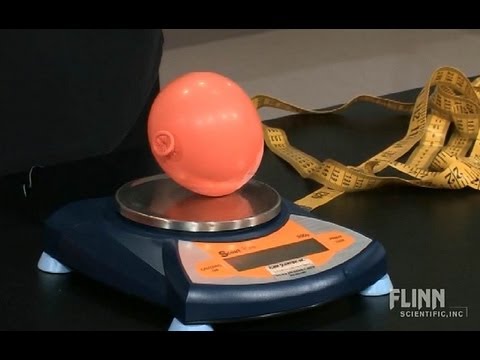
On this slide you will find typical values of the properties of air at sea level static conditions for a standard day. We are all aware that pressure and temperature of the air depend on your location on the earth and the season of the year. And while it is hotter in some seasons than others, pressure and temperature change day to day, hour to hour, sometimes even minute to minute during severe weather. The values presented on the slide are simply average values used by engineers to design machines. We also know that all of the state-of-the-gas variables will change with altitude, which is why the typical values are given at sea level, static conditions. Because the gravity of the Earth holds theatmosphere to the surface, as altitude increases, air density, pressure, and temperature decrease.
At the edge of space, the density is almost zero. The variation of the air from the standard can be very important since it affects flow parameters like the speed of sound. The ideal gas equation and the ideal gas constant, which express the ideal gas law provide a means for calculating air density for different pressures and temperatures. Although this article is primarily about determining the density of air, the density of other gases at known temperature and gas pressure can also be estimated using the ideal gas law in the same way. The density altitude is the altitude relative to standard atmospheric conditions at which the air density would be equal to the indicated air density at the place of observation. If you change the air temperature humidity or the altitude and hence the pressure the air density will change too.
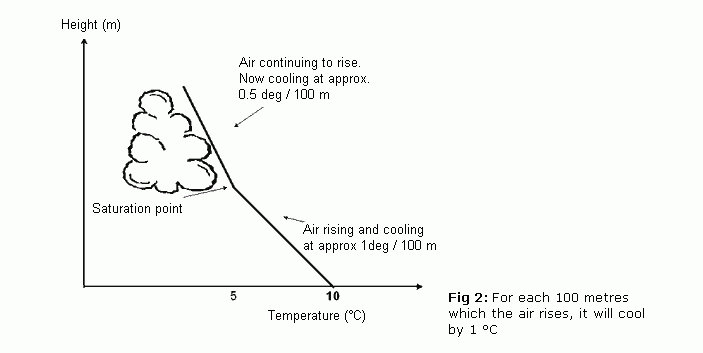
What is standard day at sea level air pressure is 29.9 2HG and temperature is 15 C. These conditions define the international standard atmosphere ISA Deviations from the standard conditions affect the density of the air impacting aircraft performance. A "high" density altitude means that air density is reduced, which has an adverse impact on aircraft performance. The published performance criteria in the Pilot's Operating Handbook are generally based on standard atmospheric conditions at sea level (that is, 59 oF or 15 C. and 29.92 inches of mercury). Your aircraft will not perform according to "book numbers" unless the ...

The addition of water vapor to air reduces the density of the air, which may at first appear counter-intuitive. This occurs because the molar mass of water (18 g/mol) is less than the molar mass of dry air (around 29 g/mol). For any gas, at a given temperature and pressure, the number of molecules present is constant for a particular volume (see Avogadro's Law). So when water molecules are added to a given volume of air, the dry air molecules must decrease by the same number, to keep the pressure or temperature from increasing. Hence the mass per unit volume of the gas decreases.

If you need to calculate the density of dry air, you can apply the ideal gas law. This law expresses density as a function of temperature and pressure. Like all gas laws, it is an approximation where real gases are concerned but is very good at low pressures and temperatures. Increasing temperature and pressure adds error to the calculation. Within the troposphere, the air temperature in Earth's atmosphere decreases with an increase in altitude. According to the international standard atmosphere and 1976 U.S.

Standard Atmosphere , the rate of decrease of temperature is 6.5 K/km from sea level to 11 km or 36,089 feet. In the region from 11 to 20 km or 65,617 feet the temperature is constant and is equal to –56.5 °C (–69.7 °F or 216.7 K). In the ionosphere, from 20 to32 km or 104,987 feet, the rate of decrease of temperature is 1.0 K/km, and so on. These values are tabulated below to the altitude of 86 km (geopotential altitude 84.85 km) in Table 4 of the 1976 USSA document. It is only impacted when altitude decreases or increases.

Density Of Air In Slug Ft3 In the ISA model, the standard sea level pressure/temperature is 29.92 in. As atmospheric pressure decreases with height, the temperature will decrease at a standard lapse rate. This is a good question to ask, because the air in a pipe friction loss, drag force, or pitot tube calculation, is indeed a real gas, not an ideal gas. Fortunately, however, many real gases behave almost exactly like an ideal gas over a wide range of temperatures and pressures. The ideal gas law doesn't work well for very low temperatures or very high gas pressures . For many practical, real situations, however, the ideal gas law gives quite accurate values for the density of air at different pressures and temperatures.

Where ρ is the air density, p is absolute pressure, Rspecific is the specific gas constant for dry air, and T is absolute temperature. For any ideal gas, at a given temperature and pressure, the number of molecules is constant for a particular volume (see Avogadro's Law). The density of a gas is its mass per unit volume, typically expressed in lbm/ft3 or slugs/ft3 in U.S. units and in kg/m3 for S.I. The gas density is an important parameter for gas pipe flow calculations. The density of any gas increases with increasing pressure and decreases with increasing temperature. TAS. True airspeed is CAS corrected for nonstandard pressure and temperature.

True airspeed and CAS are the same in standard atmosphere at sea level. But under nonstandard conditions, TAS is found by applying a correction for pressure altitude and temperature to the CAS. In the interests of space, only fundamental equations needed to obtain temperature, pressure, and density in the troposphere are provided in this section.

Note that because we consider air as the ideal gas, and only dry air, the result of calculations is only an approximation. The most accurate results can be obtained at low temperature and pressure values (at high altitudes!). The density of air is the mass per unit volume of atmospheric gases. The density of air, or how light it is, depends on the temperature and pressure of the air. Typically, the value given for the density of air is at STP .

This occurs because the molecular mass of water (18 g/mol) is less than the molecular mass of dry air (around 29 g/mol). Of course, the real atmosphere is never the same as considered in this standard. Variations in temperature affect the air density and consequently the pressure and weight. In cold air, pressure decreases more rapidly than in hot air. On a cold day, the true altitude will be lower than the altitude displayed on the altimeter.

Where T is the kinetic temperature, which is the air temperature we usually measure using a thermometer. It is a function of the velocity of the molecules of gases of the Earth's atmosphere. M0 is the molecular mass of air at sea level and MH is the molecular mass of air at the altitude H.

At the altitudes below 100 km, molecular mass of air remains constant, therefore the molecular temperature is equal to the kinetic temperature. If we can treat air as an ideal gas, then the ideal gas law in this form can be used to calculate the density of air at different pressures and temperatures. But as altitude increases the density drops dramatically.

It also changes with variation in atmospheric pressure temperature and humidity. Is recommended by several piston engine manufacturers without specifically presenting derivations for it. As will be demonstrated in the following example, it over-estimates the engine power when compared to the Gagg and Ferrar model with density ratio based on the ideal gas law. The author recommends the latter method as it yields more conservative performance estimations.

The barometric formula is used in both ISA and USSA to model how the pressure and density of air changes with altitude. Two different equations are used with the data from Table 1 above for determining the pressure at various height intervals from 0 to 86 km. Standard Atmosphere,1976 is an idealized, steady-state representation of the earth's atmosphere from the surface to 1000 km". The model is based on existing international standards and is largely consistent in methodology with the International Standard Atmosphere .

The equations used are adopted by the United States Committee on Extension to the Standard Atmosphere , which represented 29 U.S. scientific, governmental, military and engineering organizations. The U.S. Standard Atmosphere model represents the Earth's atmosphere pressure, temperature, density and viscosity distributions at various altitudes. The model divides the atmosphere into seven layers to a maximum of 86 km. The main difference between the US Standard Atmosphere and ISA is mainly in the assumed temperature distribution at higher altitudes, which are not covered in this converter. This occurs because the molecular mass of water is less than the molecular mass of air .

For any gas, at a given temperature and pressure, the number of molecules present is constant for a particular volume. So when water molecules are introduced to the air, the number of air molecules must reduce by the same number in a given volume, without the pressure or temperature increasing. Density altitude is a function of atmospheric pressure and temperature at a particular altitude . It is, in essence, the density of the standard atmosphere; however, the altitude value will either be greater or less than the true altitude depending on the condition of the air. For liquids, mass density is not a strong function of temperature and pressure. Hence, density is generally assumed to be independent of the temperature and pressure for liquids.

On the other hand, for gases, density varies with both temperature and pressure. The relation between ρ, T and P for gases is given by the ideal gas law, which will be presented in a later section. It mainly simulates the total pressure and static pressure in aircraft flight. A mechanical altimeter with the barometric adjust knob measures the atmospheric pressure on the static port outside the aircraft. It is calibrated to show the pressure as an altitude above sea level. Before takeoff and landing, the pilot obtains a local barometric reading from the airport and sets it in the small window using the knob.
STP is one atmosphere of pressure at 0 degrees C. Since this would be a freezing temperature at sea level, dry air is less dense than the cited value most of the time. However, air typically contains a lot of water vapor, which would make it denser than the cited value. Determine the ratio of the mass of oxygen inhaled for each breath at this high altitude compared to that at sea level. Assume that the air composition is the same at sea level as it is at 15,000 ft.

Density of air at sea level is 2.377×10⁻³ slugs/ft3 and density of air at 15,000 is 1.496×10⁻³ slugs/ft3. EAS. Equivalent airspeed is CAS corrected for compression of the air inside the pitot tube. Equivalent airspeed is the same as CAS in standard atmosphere at sea level. As the airspeed and pressure altitude increase, the CAS becomes higher than it should be and a correction for compression must be subtracted from the CAS.

17] Viscosity can be simply defined as the internal friction of a fluid caused by molecular attraction which makes it resist a tendency to flow. The viscosity of air is important when discussing airflow in the region very close to the surface of the aircraft. The viscosity of gases is unlike that of liquids, in that with gases an increase in temperature causes an increase in viscosity. The coefficient of absolute viscosity has been assigned the symbol μ .

Since aerodynamics often involves considerations f both viscosity and density, ma more usual form of viscosity measurement, known as kinematic viscosity, is often used. 15] The static pressure of the air P is simply the weight per unit area of the air above the level under consideration. For instance, the weight of a column of air, with a cross sectional area of 1 ft2 and extending upward from sea level through the atmosphere is 2116 lb. The sea level static pressure is, therefore, 2116 psf (or 14.7 psi). Static pressure is reduced as altitude is increased because there is less air weight above.

At 18,000 ft altitude the static pressure is about half that at sea level. It is critical to determine aircraft performance under different loading situations during the SAE Aero Design East Competition. For half-load, the key focus is on the static thrust provided by the propeller. If this thrust remains constant throughout the different loading conditions, takeoff time reduces to about .5 s.
This means the pilot will have to throttle back considerably when the payload is less than maximum to avoid motor burnout. In the no load configuration the velocities are half of what they were under full load. Drag will be very low and the pilot must get a good sense of how much thrust to add, otherwise the plane just won't take off.
For convenience, the equations for temperature, pressure, and density are summarized below for a standard atmosphere for both the SI and UK systems of units by inserting the appropriate constants. Note that the subscripts represent the units for each value. Depending on the measuring instruments, use, area of expertise and necessary rigor of the result different calculation criteria and sets of equations for the calculation of the density of air are used. Earth's atmosphere is composed of air.Air is a mixture of gases, 78% nitrogen and 21% oxygen with traces of water vapor, carbon dioxide, argon, and various other components. We usually model air as auniform gas with properties that are averaged from all the individual components. Any gas has certainpropertiesthat we can detect with our senses.

The values and relations of the properties define thestateof the gas. Where ρ is the air density, p is pressure, R is the specific gas constant, and T is temperature in kelvins. Standard sea-level conditions , also known as sea-level standard , defines a set of atmospheric conditions for physical calculations. The term "standard sea level" is used to indicate that values of properties are to be taken to be the same as those standard at sea level, and is done to define values for use in general calculations. To determine how much lift can be generated and, consequently, the payload fraction, the Reynolds number is calculated using Eq 26 using the air density values found earlier. Relative Density is the ratio of the actual air density to the standard sea level density, expressed as a percentage.

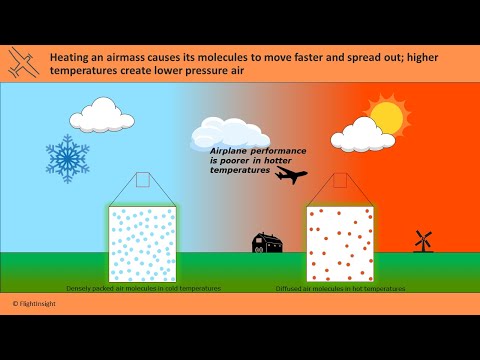
Air density is affected by the air pressure, temperature and humidity. The density of the air is reduced by decreased air pressure, increased temperatures and increased moisture. A reduction in air density reduces engine horsepower, reduces aerodynamic lift and reduces drag. Density altitude is yet another sort of altitude, based solely on air density.

These models are known as "standard atmospheres". Their use is necessary for aircraft development, for studying their performance, for comparing the performance of different aircraft and for many other aeronautic and aviation science applications. Depending on the measuring instruments used, different sets of equations for the calculation of the density of air can be applied.

Air is a mixture of gases and the calculations always simplify, to a greater or lesser extent, the properties of the mixture. STP in chemistry is the abbreviation for Standard Temperature and Pressure. STP most commonly is used when performing calculations on gases, such as gas density.


No comments:
Post a Comment
Note: Only a member of this blog may post a comment.